(written 23 August 2011)
Only kilometers out of Lusaka, the city begins to melt away. I've secured a super hitch with a kind Zambian gentleman headed toward the Copperbelt; he'll drop me 1/4 of the way in Kapiri Mposhi (though, since I'm only endeavoring to cover 1/2 of the trip to Kasama today, he's really getting me halfway). I'm venturing back to Mbala district the way someone might move cross-country to Alaska, with several overnight stops along the way.
[...later that day...]
My super hitch, in addition to transporting me in his clean (though not ostentatious) ride, bought me a Sprite and a tea break, let me doze in his car while he drove, and didn't once ask for my phone number. He even bypassed the usual Kapiri junction to deposit me at a police checkpoint nearby, imploring the officers to help me secure a free ride the rest of the way to Serenje. I'm not entirely sure if I should be attempting to secure a hitch or not; they've told me I can sit (and I am, resting on my blue Cabela's pack, with my back against the mud brick wall of the checkpoint post), but many vehicles, including cushy private ones, have gone past without inquiry. Serenje isn't far--3 or 4 hours, at most--and it's still mid-morning, so I'm not worried, but it is interesting to see exactly what happens (or doesn't) at these checkpoints from the police's perspective.
It will be a few days before I arrive back at my own house and get to sleep in my own bed, but already I am shifting back into the Zambian territory I love. The police, who are working 24-hour shifts, have made a big brazier out of a tire rim, and for lunch someone procured a live chicken, which--having suffered the fate of a sharp knife--is sizzling in hot oil at the moment. Moments ago, for the first time in over two weeks, I used a grass-walled icimbusu (pit latrine) instead of a porcelain toilet, and it was lovely not to hassle with faulty flushing mechanisms or the reality of using a gallon of water to whisk away a few squares of toilet paper. And Mambwe! Though I fear I've gotten a bit rusty, having used it minimally in Lusaka (where English is the standard vernacular, and there are very few Mambwes in general, so different local languages are used), using it with the officers here has come naturally. I'm not home yet, but I'm getting there, and it feels good.
Thursday, August 25, 2011

Sunday, August 21, 2011
In-Service Training
(written 17 and 18 August, 2011)
31 January 2011, Philadelphia, downtown Holiday Inn: Twenty-nine strangers from all over the U.S. line up to turn in paperwork and officially register for departure with the United States Peace Corps. The scene is not unlike move-in day of freshman year, the University of Anywhere; the same conversation streams flow over and over: "Hi! Where are you from? Are you excited? Me too! How much stuff did you bring?" Twenty-eight new friends (one is saying goodbye to her grandparents, who live locally) wander down the street, shivering in the winter air, and pile around tables in the second floor of a cozy, wood-stove-warmed local restaurant, completely overwhelming their two staff members with orders of wraps and fries and pitchers of soda and beer.
The next three days are a whirlwind of orientation to, and preparation for, what most of them have been thinking about (and waiting for) over a course of many months since submitting their applications: Peace Corps service, two years living and working in a foreign country. They are to work in development, but they are not "aid" workers; they are, as Peace Corps is an agency of the State Department, under the auspices of the U.S. government, but they are not diplomats. Their job is, at its core, simply explained in 3 goals, shared by Peace Corps worldwide for 50 yeasr: to provide skilled labor to countries who have requested it, to help others understand Americans and United States culture, and to share a knowledge and understanding of their host country, its people, and its culture, with Americans. These 29, as they are bussed from Philadelphia to New York City, board a South African Airlines flight to Johannesburg, switch into a smaller plane for the journey north to Zambia's capital, and touch down on the tarmac of Lusaka International Airport, join thousands who have made similar journeys, in heart as well as body, since the early days of President Kennedy's administration in 1961.
The whirlwind, having crossed the ocean, doesn't stop; they are welcomed to the country by the open arms of PC staff, housed together in shared rooms in a training center, and--within days--trucked off in Land Cruisers, in groups of two to four, to visit Volunteers at their sites, to see "how Volunteers actually live," and to get a sense of what they've signed up for--if this is the right place, the right job, the right time for each of them. (Over time, two decide that it is not, and with sadness but certainty, they bid farewell to their friends and board return flights to the States.) Back from site visits, they are assigned to their new language--the country has 72, plus the official language of English, but they'll be learning one of five languages based on the region where they'll eventually be living. Then they are each ushered to a host family, with whom they live for three months. During this time, each day is filled with training: sessions on language, safety, health, culture, Zambian history, and--since their job is Rural Education Development (RED)--the structure of the Ministry of Education and current challenges in the educational system.
Likewise, the days are filled with the details of a new lifestyle: warm bucket baths taken outside in the privacy of a tall grass shelter; meals of nshima (the staple carbohydrate) and relish (the side dish accompanying nshima, generally meat, greens or other vegetables, beans, or eggs), waking and retiring in tune with the sun and moon's daily dance. They begin to know and feel at ease with their host families and their trainers, both Zambian and American. They become closer to each other over glass bottles of Zambian and South African beer at the Stoop and games of football (soccer) and frisbee. They test romantic possibilities and, more often, lament the gender imbalance, as the group has only 7 men to its now 20 women. They meet more Volunteers, who share not only technical expertise in their work, but also stories and advice about life in country. They visit their soon-to-be homes to test out their language, meet counterparts, and again decide: is this right for me?
Soon the rains begin to diminish and the mornings and evenings become cooler as the season begins to change. Near the end of April, they bid goodbye to their host families; they swear in, marking their transition from Trainees to Volunteers; they enjoy a night of revelry together in a Lusaka club. The next morning, they pile into Land Cruisers (now a comfortably familiar mode of transport) and head to their Provincial capitals, where they spend Easter weekend and a few days following buying household supplies and staple groceries. They get comfortable in their Provincial houses and offices, and some get very comfortable with other PCVs passing through. Days of anticipation and preparation melt into nights of warm group meals, candlelight and guitar music, movies and conversation, and the exhilarating kiss of beverages and new lips.
Then they say, again, farewell. Piled with plastic buckets and plastic grocery bags, the Cruiser pulls away with each person to deposit him or her in the home that awaits. And then they are alone.
I am alone--in my village in the northernmost part of rural Zambia--having left my family and friends in the U.S. three months before, and having left all those who've become my support, become my confidantes, during those three months. I'll see some of them in two months at a provincial meeting, and all of my training group in three months at In-Service Training (IST), and other PCVs here and there as we cross paths. But for the most part, I am alone to make this real: to find my role, myself in who I will be, here in my community. It's what I have been longing for, because I haven't always loved the 'gang of Americans' group dynamic; I didn't join Peace Corps to hang out with other Americans for two years. But still, they are good people and are my family here, and now I'll be without them for a series of months.
Yet...I don't feel alone. My family in the village is a web of siblings and children and cousins who respect my privacy but provide ready company. Eight hundred pupils come to the school (a minute's walk from my house) when the term begins ten days after my arrival. The teachers who met me on my visit in March welcome me back, and new ones come, and as the days and weeks pass I easily become comfortable with myself, my routine, my community. Days are filled with classroom observations, weighing babies at the Under-5 clinic, frying fritters in the market, biking all over Creation to visit different schools in my zone, attending community workshops and meetings, studying with tireless grade 8 and 9 pupils, attending church services, making a compost pile, harvesting corn (by hand, of course), pounding peanuts into butter, constantly cleaning my house, practicing flute, reading, writing letters, organizing books in the school staff room, playing with my neighbor siblings, dancing with teenagers to the palpable rhythm of wood-and-animal-skin drum and voice, encountering challenges but relishing successes as well.
I make a few trips to my boma, Mbala, the nearest town, for meetings, for supplies, to celebrate the 4th of July with other PCVs and American missionaries, to attend a cultural ceremony in the village of another PCV. It's always a bit strange to be out of my village, and I'm happy to return. Two trips to the provincial capital, Kasama, two hours away by car, are more disorienting--not only because there I find a modern supermarket and an urban atmosphere but because there I find American PCVs, each with their own joys and stresses and approach within Peace Corps life. My village is my home; it's safe, it's comfortable, and although it's not perfect (and I'm not sure on that last one), I love it there.
And so Community Entry--as those first three months alone are called by Peace Corps worldwide--comes to an end, as does the school term. And the 27 of those Americans who first warmed to each other by a woodstove in Philly are called back from the reaches of Zambia to reconvene for IST. They come, celebrating their reunion, full of stories, laden with lists of to-do and to-buy-in-Lusaka things, from "see the Harry Potter movie" to "contact solution." They come mainly for more training, only now, they are not so fresh, so raw. They come with intimate knowledge of issues that were raised in their pre-service training, those first three months in country. Corporal punishment, high illiteracy levels, understaffing, and pupil defilement aren't just ethereal threats but active realities. NBTL, SITE, ROC, TGM, SPRINT, CPD, DEBS--the acronyms now roll off their tongues effortlessly as they share all they've learned about the implementation of Ministry of Education policies within their zones. They aren't just foreign visitors anymore; they are educational professionals, invested in their schools, well-informed and ever-learning to become some sort of authority on the content and structure of Zambian education. They shift back into a professional world, even if it's only business-casual, with training sessions from 8:00 to 17:30 and tea breaks with scones and bedrooms with electricity and breakfast & lunch that's cooked for them and seminar rooms with light and climate control and Powerpoint presentations and enough chairs, papers, and pens for everyone. They are loaded down with even more books and manuals about teaching, about development. Knowing what their specific communities need, they get more training on how to teach ESL classes, how to begin HIV/AIDS awareness projects, how to write proposals and help organize IGAs (income-generating activities).
And they are dipped back into the broader context of their roles here. They delve, together and with counterparts from their villages, into development theory--the abstractions of designing successful projects (those that address root causes of problems and are sustainable) and designing for behavior change, a model rife with vocabulary like determinants and barrier analysis. They engage in discussions about whether it does more good than harm for a PCV to help a community bring in outside funding for any cause, and from where that funding should come; they discuss their current, blossoming, or hoped-for relationships with PCVs, host country nationals, or those determined ones across the pond who are counting down the days one by one.
And they once again find delight among their green and brown bottles of Mosi and Castle. Now in the city, they satisfy their palates with Indian and Thai and Mexican cuisine, with curry and mint and cilantro. The savor the coolness of dairy in soft chunks of mozzarella and smooth sips of milkshakes. Even if, in the village, they don't miss alcohol (consumed minimally or privately, since alcoholism is a rampant problem in rural Zambia and open consumption doesn't garner respect) and enjoy daily nshima with their families each night under the stars, once together again they nourish desires and habits and personality traits that go unfed in their homes. They're still PCVs--more so now than ever, having successfully begun their integration into their communities and increasingly competent in their technical skills--but they're also young (in age or at heart) people abroad in an international city. And they like movies and dancing and wine and staying up late and speaking in frantic American English.
And I am here, and I am empowered and encouraged by the professionalism of my colleagues, because they are colleagues, and they are doing so much already, and they are skilled and dedicated and invested. I am honored to be part of this group. But I'm not always 100% comfortable in the group, maybe because I, too, like movies and dancing and wine and fast-paced chatter, but I like who I am in the village better. I love, selfishly, that I'm getting such a great education in my job: in direct experience and through training. I enjoy the opportunity to interact with Peace Corps staff, both Zambian and American, and to learn about the different ways in which life can unfold itself in Zambia--because, just as in the U.S. and many countries, there is a whole segment of the population that is well-educated, has a relatively high socio-economic status, and lives city life. And I, too, having dwelled both in small-town rural America and in some of the U.S.'s biggest cities, like the chance to take a taxi, to dine at a restaurant, to absorb the bright gleam of mall corridors.
But there's an interesting tension knowing that many of those who live in my village--the adults in our literacy class, the mothers selling tomatoes in the market--don't have these opportunities. And I don't know if my colleagues, my friends, my peers in this group share this tension, so sometimes I feel not only jarred by being thrust back into this environment but alone in the questions I pose: about the inequality that still exists, the tremendous privileges I still experience even as a Peace Corps Volunteer living in the bush.
We have been here for six and a half months. Close to one-fourth of the time we committed to spend in this beautiful country has passed already. I live in the village, and that role, those emotional bonds, are perhaps my main focus, the core of my experience here. But I'm also a RED 2011 PCV, and I'm sharing this experience with 26 others; we look forward to our shared Close-of-Service (COS) date, and all that we hope to accomplish before then, the way classmates look to graduation. I'm an American, so there is a sense of camaraderie I may feel among other Americans--PCVs or otherwise--and ways that I can be myself that I don't fully experience with my local friends. And I have a university degree and a wide variety of work experience, so at the risk of sounding conceited, I must admit that here, I'm among the intelligentsia, the academic and professional elite. Whether I like it or not, this does set me a bit apart from some of the members of my community.
While I came, then, to be, as much as possible, a villager, I'm learning that these other roles (and many more I'll leave unwritten here) are part of me, too. I can't escape them, and I'm not sure I should try. Rather, I can delight in what I have, wherever I am. Here in the LSK, it may be a milkshake and dancing to Justin Bieber at midnight against a backgroup of pulsating flourescent lights; in my cozy home near the Tanzanian border, it may mean a cup of tea and a novel before bedtime (read: 8:30pm) or an energizing literacy lesson in a cornfield where 40-year-old women are learning, some for the first time, to write their names, or sitting around the brazier with my Zambrothers and sisters, warming ourselves to a soundtrack of multiplication fact quizzes, songs, or Mambwe conversation. Each experience, urban or rural, collective or all my own, weaves itself into this 27-month tapestry, forming a design still yet to be beheld.
31 January 2011, Philadelphia, downtown Holiday Inn: Twenty-nine strangers from all over the U.S. line up to turn in paperwork and officially register for departure with the United States Peace Corps. The scene is not unlike move-in day of freshman year, the University of Anywhere; the same conversation streams flow over and over: "Hi! Where are you from? Are you excited? Me too! How much stuff did you bring?" Twenty-eight new friends (one is saying goodbye to her grandparents, who live locally) wander down the street, shivering in the winter air, and pile around tables in the second floor of a cozy, wood-stove-warmed local restaurant, completely overwhelming their two staff members with orders of wraps and fries and pitchers of soda and beer.
The next three days are a whirlwind of orientation to, and preparation for, what most of them have been thinking about (and waiting for) over a course of many months since submitting their applications: Peace Corps service, two years living and working in a foreign country. They are to work in development, but they are not "aid" workers; they are, as Peace Corps is an agency of the State Department, under the auspices of the U.S. government, but they are not diplomats. Their job is, at its core, simply explained in 3 goals, shared by Peace Corps worldwide for 50 yeasr: to provide skilled labor to countries who have requested it, to help others understand Americans and United States culture, and to share a knowledge and understanding of their host country, its people, and its culture, with Americans. These 29, as they are bussed from Philadelphia to New York City, board a South African Airlines flight to Johannesburg, switch into a smaller plane for the journey north to Zambia's capital, and touch down on the tarmac of Lusaka International Airport, join thousands who have made similar journeys, in heart as well as body, since the early days of President Kennedy's administration in 1961.
The whirlwind, having crossed the ocean, doesn't stop; they are welcomed to the country by the open arms of PC staff, housed together in shared rooms in a training center, and--within days--trucked off in Land Cruisers, in groups of two to four, to visit Volunteers at their sites, to see "how Volunteers actually live," and to get a sense of what they've signed up for--if this is the right place, the right job, the right time for each of them. (Over time, two decide that it is not, and with sadness but certainty, they bid farewell to their friends and board return flights to the States.) Back from site visits, they are assigned to their new language--the country has 72, plus the official language of English, but they'll be learning one of five languages based on the region where they'll eventually be living. Then they are each ushered to a host family, with whom they live for three months. During this time, each day is filled with training: sessions on language, safety, health, culture, Zambian history, and--since their job is Rural Education Development (RED)--the structure of the Ministry of Education and current challenges in the educational system.
Likewise, the days are filled with the details of a new lifestyle: warm bucket baths taken outside in the privacy of a tall grass shelter; meals of nshima (the staple carbohydrate) and relish (the side dish accompanying nshima, generally meat, greens or other vegetables, beans, or eggs), waking and retiring in tune with the sun and moon's daily dance. They begin to know and feel at ease with their host families and their trainers, both Zambian and American. They become closer to each other over glass bottles of Zambian and South African beer at the Stoop and games of football (soccer) and frisbee. They test romantic possibilities and, more often, lament the gender imbalance, as the group has only 7 men to its now 20 women. They meet more Volunteers, who share not only technical expertise in their work, but also stories and advice about life in country. They visit their soon-to-be homes to test out their language, meet counterparts, and again decide: is this right for me?
Soon the rains begin to diminish and the mornings and evenings become cooler as the season begins to change. Near the end of April, they bid goodbye to their host families; they swear in, marking their transition from Trainees to Volunteers; they enjoy a night of revelry together in a Lusaka club. The next morning, they pile into Land Cruisers (now a comfortably familiar mode of transport) and head to their Provincial capitals, where they spend Easter weekend and a few days following buying household supplies and staple groceries. They get comfortable in their Provincial houses and offices, and some get very comfortable with other PCVs passing through. Days of anticipation and preparation melt into nights of warm group meals, candlelight and guitar music, movies and conversation, and the exhilarating kiss of beverages and new lips.
Then they say, again, farewell. Piled with plastic buckets and plastic grocery bags, the Cruiser pulls away with each person to deposit him or her in the home that awaits. And then they are alone.
I am alone--in my village in the northernmost part of rural Zambia--having left my family and friends in the U.S. three months before, and having left all those who've become my support, become my confidantes, during those three months. I'll see some of them in two months at a provincial meeting, and all of my training group in three months at In-Service Training (IST), and other PCVs here and there as we cross paths. But for the most part, I am alone to make this real: to find my role, myself in who I will be, here in my community. It's what I have been longing for, because I haven't always loved the 'gang of Americans' group dynamic; I didn't join Peace Corps to hang out with other Americans for two years. But still, they are good people and are my family here, and now I'll be without them for a series of months.
Yet...I don't feel alone. My family in the village is a web of siblings and children and cousins who respect my privacy but provide ready company. Eight hundred pupils come to the school (a minute's walk from my house) when the term begins ten days after my arrival. The teachers who met me on my visit in March welcome me back, and new ones come, and as the days and weeks pass I easily become comfortable with myself, my routine, my community. Days are filled with classroom observations, weighing babies at the Under-5 clinic, frying fritters in the market, biking all over Creation to visit different schools in my zone, attending community workshops and meetings, studying with tireless grade 8 and 9 pupils, attending church services, making a compost pile, harvesting corn (by hand, of course), pounding peanuts into butter, constantly cleaning my house, practicing flute, reading, writing letters, organizing books in the school staff room, playing with my neighbor siblings, dancing with teenagers to the palpable rhythm of wood-and-animal-skin drum and voice, encountering challenges but relishing successes as well.
I make a few trips to my boma, Mbala, the nearest town, for meetings, for supplies, to celebrate the 4th of July with other PCVs and American missionaries, to attend a cultural ceremony in the village of another PCV. It's always a bit strange to be out of my village, and I'm happy to return. Two trips to the provincial capital, Kasama, two hours away by car, are more disorienting--not only because there I find a modern supermarket and an urban atmosphere but because there I find American PCVs, each with their own joys and stresses and approach within Peace Corps life. My village is my home; it's safe, it's comfortable, and although it's not perfect (and I'm not sure on that last one), I love it there.
And so Community Entry--as those first three months alone are called by Peace Corps worldwide--comes to an end, as does the school term. And the 27 of those Americans who first warmed to each other by a woodstove in Philly are called back from the reaches of Zambia to reconvene for IST. They come, celebrating their reunion, full of stories, laden with lists of to-do and to-buy-in-Lusaka things, from "see the Harry Potter movie" to "contact solution." They come mainly for more training, only now, they are not so fresh, so raw. They come with intimate knowledge of issues that were raised in their pre-service training, those first three months in country. Corporal punishment, high illiteracy levels, understaffing, and pupil defilement aren't just ethereal threats but active realities. NBTL, SITE, ROC, TGM, SPRINT, CPD, DEBS--the acronyms now roll off their tongues effortlessly as they share all they've learned about the implementation of Ministry of Education policies within their zones. They aren't just foreign visitors anymore; they are educational professionals, invested in their schools, well-informed and ever-learning to become some sort of authority on the content and structure of Zambian education. They shift back into a professional world, even if it's only business-casual, with training sessions from 8:00 to 17:30 and tea breaks with scones and bedrooms with electricity and breakfast & lunch that's cooked for them and seminar rooms with light and climate control and Powerpoint presentations and enough chairs, papers, and pens for everyone. They are loaded down with even more books and manuals about teaching, about development. Knowing what their specific communities need, they get more training on how to teach ESL classes, how to begin HIV/AIDS awareness projects, how to write proposals and help organize IGAs (income-generating activities).
And they are dipped back into the broader context of their roles here. They delve, together and with counterparts from their villages, into development theory--the abstractions of designing successful projects (those that address root causes of problems and are sustainable) and designing for behavior change, a model rife with vocabulary like determinants and barrier analysis. They engage in discussions about whether it does more good than harm for a PCV to help a community bring in outside funding for any cause, and from where that funding should come; they discuss their current, blossoming, or hoped-for relationships with PCVs, host country nationals, or those determined ones across the pond who are counting down the days one by one.
And they once again find delight among their green and brown bottles of Mosi and Castle. Now in the city, they satisfy their palates with Indian and Thai and Mexican cuisine, with curry and mint and cilantro. The savor the coolness of dairy in soft chunks of mozzarella and smooth sips of milkshakes. Even if, in the village, they don't miss alcohol (consumed minimally or privately, since alcoholism is a rampant problem in rural Zambia and open consumption doesn't garner respect) and enjoy daily nshima with their families each night under the stars, once together again they nourish desires and habits and personality traits that go unfed in their homes. They're still PCVs--more so now than ever, having successfully begun their integration into their communities and increasingly competent in their technical skills--but they're also young (in age or at heart) people abroad in an international city. And they like movies and dancing and wine and staying up late and speaking in frantic American English.
And I am here, and I am empowered and encouraged by the professionalism of my colleagues, because they are colleagues, and they are doing so much already, and they are skilled and dedicated and invested. I am honored to be part of this group. But I'm not always 100% comfortable in the group, maybe because I, too, like movies and dancing and wine and fast-paced chatter, but I like who I am in the village better. I love, selfishly, that I'm getting such a great education in my job: in direct experience and through training. I enjoy the opportunity to interact with Peace Corps staff, both Zambian and American, and to learn about the different ways in which life can unfold itself in Zambia--because, just as in the U.S. and many countries, there is a whole segment of the population that is well-educated, has a relatively high socio-economic status, and lives city life. And I, too, having dwelled both in small-town rural America and in some of the U.S.'s biggest cities, like the chance to take a taxi, to dine at a restaurant, to absorb the bright gleam of mall corridors.
But there's an interesting tension knowing that many of those who live in my village--the adults in our literacy class, the mothers selling tomatoes in the market--don't have these opportunities. And I don't know if my colleagues, my friends, my peers in this group share this tension, so sometimes I feel not only jarred by being thrust back into this environment but alone in the questions I pose: about the inequality that still exists, the tremendous privileges I still experience even as a Peace Corps Volunteer living in the bush.
We have been here for six and a half months. Close to one-fourth of the time we committed to spend in this beautiful country has passed already. I live in the village, and that role, those emotional bonds, are perhaps my main focus, the core of my experience here. But I'm also a RED 2011 PCV, and I'm sharing this experience with 26 others; we look forward to our shared Close-of-Service (COS) date, and all that we hope to accomplish before then, the way classmates look to graduation. I'm an American, so there is a sense of camaraderie I may feel among other Americans--PCVs or otherwise--and ways that I can be myself that I don't fully experience with my local friends. And I have a university degree and a wide variety of work experience, so at the risk of sounding conceited, I must admit that here, I'm among the intelligentsia, the academic and professional elite. Whether I like it or not, this does set me a bit apart from some of the members of my community.
While I came, then, to be, as much as possible, a villager, I'm learning that these other roles (and many more I'll leave unwritten here) are part of me, too. I can't escape them, and I'm not sure I should try. Rather, I can delight in what I have, wherever I am. Here in the LSK, it may be a milkshake and dancing to Justin Bieber at midnight against a backgroup of pulsating flourescent lights; in my cozy home near the Tanzanian border, it may mean a cup of tea and a novel before bedtime (read: 8:30pm) or an energizing literacy lesson in a cornfield where 40-year-old women are learning, some for the first time, to write their names, or sitting around the brazier with my Zambrothers and sisters, warming ourselves to a soundtrack of multiplication fact quizzes, songs, or Mambwe conversation. Each experience, urban or rural, collective or all my own, weaves itself into this 27-month tapestry, forming a design still yet to be beheld.
Confession
(written 7 August 2011)
I'm not particularly noble. I'm not selflessly giving of myself or making a big sacrifice to be here.
At first, my biggest struggle in Zambia was fitting in with other Americans. I felt like everyone I arrived with came loaded with gadgetry: Kindles, iPods, computers, solar chargers. I was excited to live in an African village, and I didn't want to live an American existence in the village. Don't get me wrong: all of those items are useful, and I have a great appreciation for the sharing mentality that Peace Corps Volunteers have; I love being able to use their computers to Skype and having dance parties to their American music. But I don't consider those things necessary to my survival here, or even to my happiness.
Sometimes I feel a little strange when other Volunteers talk about "this crazy thing we're doing" by living here in rural villages. It has never seemed crazy or daunting or even that unorthodox to me. The vast majority of the world's population live without gadgets, without running water or electricity. A big chunk of those live in poverty as well. (Note that I don't consider a lack of electricity or taps to be, in itself, a mark of poverty.) When I joined the Peace Corps, I made a commitment to serve where they sent me, "under conditions of hardship, if necessary," but I don't consider myself to have much in the way of hardship. My thatched-roof hut formerly housed a family, so it's very big by Peace Corps standards. The thatch is lined with plastic sheeting to cut down on falling dust, the mud brick walls are smeared with lime to ward off termites, the floors are cemented to ease sweeping and keep away pests, and my doors and windows are constructed of sturdy wood with locks. Basically, I live in a palace.
That's not to say, however, that I gave no consideration to the trappings I would bring along (and I did bring a number, albethey non-electronic). A few weeks before I left, I was discussing the possible purchase of an iPod--something I've never owned--or a radio, and the pros and cons of bringing a computer, with a high school classmate who spent time after college in Kenya. "I want to live the way they [the country's citizens] do," I explained. She responded, "You do, to an extent, but you never really do," and she was right. Partly because everyone's different; there's no one way to live in Zambia just as there's no one way to live in the States. Over the past nine years, there have been big differences in how I spent time at my home in my various sejours in the Midwest and on either coast. But looking at the average lifestyle of my Zambian peers and family, I live differently. I have a bed, a supply of supermarket-sold nonperishables, and a variety of novelties: a hammock, a flute, watercolor paints. But the difference isn't in the stuff as much as it is in how I occupy my time. I have 15-20 books on loan from our Peace Corps Provincial library, and I spend hours each week reading them (plus all the manuals and technical information I have for my job as an educator). I go through notebooks like lightning; I've written dozens of letters and started a screen adaptation. I think, I ponder, I muse, I plan. I haven't changed who I am in almost any way. In fact, I came here in large part to nourish who I am, who I want to be.
I breathe clean air. I buy produce from the people who grew it, and I primarily eat food that is wholesome and minimally processed. I use the amount of water it reasonably takes, and no more, to wash myself, my clothes, my dishes, and my floor. I've made my first organic compost pile. I wake when the sun does and cook on a natural charcoal fire. My job is learning and sharing, and helping others to learn and share.
I get places using foot and pedal power or shared transportation. I occasionally get news from http://www.nytimes.com/ (I do have the advantage of an Internet phone, which is pretty wild, though the Internet access is unpredictable and unreliable), but in general, my mind is unoccupied by thoughts of debt crises in the industrialized world, or of wars and civil unrest in Africa and the Middle East, or of celebrity scandals and gossip. My mind is occupied instead with ideas for teacher trainings, multiplication facts for quizzing my host family siblings, and how I might improve relationships with my fellow teachers and community members. It's a pretty blissful existence.
I live alone, but I'm not lonely. I have other PCVs near enough for American conversation if I need it, colleagues who are interested in my presence, and community members who have worked hard to support Peace Corps bringing a Volunteer here long before I knew I was coming. I have a family that enjoys my presence, including lots of siblings/cousins who claim me as their own, greeting me excitedly with "Ya Rosie, iyawela!" (Rose, she has returned!) even if I've only been away a few hours. I've lived in a Parisian foyer with hundreds of other women, in a luxurious, shared San Diego apartment, in a shared employee house with other North Carolina wilderness camp counselors, and I'm pretty sure that despite being surrounded by people, I had more moments of feeling alone in those places than I have ever felt in my modest earthen home in Mambweland.
I'm told that, more and more, village life is a remnant of Peace Corps past. Fifty years ago, PCVs were essentially dropped in the bush and picked up two years later. That's no longer the case; the network of material and emotional support is fantastic. My particular project, or program, is well-suited to me. I work in collaboration with the Ministry of Education, and teachers are among the cadre of professionals in Zambia. So I live a bit like a villager but am regarded a bit as a member of the intelligentsia, the skilled. My particular site is cushy; I have a market, little shops, a school, a clinic, and churches all within short walking distance. My water source is a well, a basketball court's distance from my door, which provides clean agua. I reach tarmac--and some form of transport--in less than 5 minutes on foot. But that said, several of the schools in my zone are 20+ kilometers further "in the bush." The residents' living situations aren't much different from my own, other than they have to bike 20km up or down a mountain to get anywhere.
I do believe I have an intimate perspective on life in rural Zambia, but it's a fallacy to say that I can truly understand what it means to be a rural Zambian. By virtue only of being born when and where and to whom I was, I have a huge network of resources and supports that is impossible to release, even if I wanted to. I don't know what it is like to go hungry, to have nothing, to lack a basic education. I am immeasurably fortunate, and so are most of my neighbors, whose lifestyle--while different from my own--isn't, to my observation, altogether unpleasant in the least. So it's a little amazing to me that I'm considered to be living "in the bush." Living in rural Africa isn't so different from living in rural America, and for now, there's no place I'd rather be calling home.
I'm not particularly noble. I'm not selflessly giving of myself or making a big sacrifice to be here.
At first, my biggest struggle in Zambia was fitting in with other Americans. I felt like everyone I arrived with came loaded with gadgetry: Kindles, iPods, computers, solar chargers. I was excited to live in an African village, and I didn't want to live an American existence in the village. Don't get me wrong: all of those items are useful, and I have a great appreciation for the sharing mentality that Peace Corps Volunteers have; I love being able to use their computers to Skype and having dance parties to their American music. But I don't consider those things necessary to my survival here, or even to my happiness.
Sometimes I feel a little strange when other Volunteers talk about "this crazy thing we're doing" by living here in rural villages. It has never seemed crazy or daunting or even that unorthodox to me. The vast majority of the world's population live without gadgets, without running water or electricity. A big chunk of those live in poverty as well. (Note that I don't consider a lack of electricity or taps to be, in itself, a mark of poverty.) When I joined the Peace Corps, I made a commitment to serve where they sent me, "under conditions of hardship, if necessary," but I don't consider myself to have much in the way of hardship. My thatched-roof hut formerly housed a family, so it's very big by Peace Corps standards. The thatch is lined with plastic sheeting to cut down on falling dust, the mud brick walls are smeared with lime to ward off termites, the floors are cemented to ease sweeping and keep away pests, and my doors and windows are constructed of sturdy wood with locks. Basically, I live in a palace.
That's not to say, however, that I gave no consideration to the trappings I would bring along (and I did bring a number, albethey non-electronic). A few weeks before I left, I was discussing the possible purchase of an iPod--something I've never owned--or a radio, and the pros and cons of bringing a computer, with a high school classmate who spent time after college in Kenya. "I want to live the way they [the country's citizens] do," I explained. She responded, "You do, to an extent, but you never really do," and she was right. Partly because everyone's different; there's no one way to live in Zambia just as there's no one way to live in the States. Over the past nine years, there have been big differences in how I spent time at my home in my various sejours in the Midwest and on either coast. But looking at the average lifestyle of my Zambian peers and family, I live differently. I have a bed, a supply of supermarket-sold nonperishables, and a variety of novelties: a hammock, a flute, watercolor paints. But the difference isn't in the stuff as much as it is in how I occupy my time. I have 15-20 books on loan from our Peace Corps Provincial library, and I spend hours each week reading them (plus all the manuals and technical information I have for my job as an educator). I go through notebooks like lightning; I've written dozens of letters and started a screen adaptation. I think, I ponder, I muse, I plan. I haven't changed who I am in almost any way. In fact, I came here in large part to nourish who I am, who I want to be.
I breathe clean air. I buy produce from the people who grew it, and I primarily eat food that is wholesome and minimally processed. I use the amount of water it reasonably takes, and no more, to wash myself, my clothes, my dishes, and my floor. I've made my first organic compost pile. I wake when the sun does and cook on a natural charcoal fire. My job is learning and sharing, and helping others to learn and share.
I get places using foot and pedal power or shared transportation. I occasionally get news from http://www.nytimes.com/ (I do have the advantage of an Internet phone, which is pretty wild, though the Internet access is unpredictable and unreliable), but in general, my mind is unoccupied by thoughts of debt crises in the industrialized world, or of wars and civil unrest in Africa and the Middle East, or of celebrity scandals and gossip. My mind is occupied instead with ideas for teacher trainings, multiplication facts for quizzing my host family siblings, and how I might improve relationships with my fellow teachers and community members. It's a pretty blissful existence.
I live alone, but I'm not lonely. I have other PCVs near enough for American conversation if I need it, colleagues who are interested in my presence, and community members who have worked hard to support Peace Corps bringing a Volunteer here long before I knew I was coming. I have a family that enjoys my presence, including lots of siblings/cousins who claim me as their own, greeting me excitedly with "Ya Rosie, iyawela!" (Rose, she has returned!) even if I've only been away a few hours. I've lived in a Parisian foyer with hundreds of other women, in a luxurious, shared San Diego apartment, in a shared employee house with other North Carolina wilderness camp counselors, and I'm pretty sure that despite being surrounded by people, I had more moments of feeling alone in those places than I have ever felt in my modest earthen home in Mambweland.
I'm told that, more and more, village life is a remnant of Peace Corps past. Fifty years ago, PCVs were essentially dropped in the bush and picked up two years later. That's no longer the case; the network of material and emotional support is fantastic. My particular project, or program, is well-suited to me. I work in collaboration with the Ministry of Education, and teachers are among the cadre of professionals in Zambia. So I live a bit like a villager but am regarded a bit as a member of the intelligentsia, the skilled. My particular site is cushy; I have a market, little shops, a school, a clinic, and churches all within short walking distance. My water source is a well, a basketball court's distance from my door, which provides clean agua. I reach tarmac--and some form of transport--in less than 5 minutes on foot. But that said, several of the schools in my zone are 20+ kilometers further "in the bush." The residents' living situations aren't much different from my own, other than they have to bike 20km up or down a mountain to get anywhere.
I do believe I have an intimate perspective on life in rural Zambia, but it's a fallacy to say that I can truly understand what it means to be a rural Zambian. By virtue only of being born when and where and to whom I was, I have a huge network of resources and supports that is impossible to release, even if I wanted to. I don't know what it is like to go hungry, to have nothing, to lack a basic education. I am immeasurably fortunate, and so are most of my neighbors, whose lifestyle--while different from my own--isn't, to my observation, altogether unpleasant in the least. So it's a little amazing to me that I'm considered to be living "in the bush." Living in rural Africa isn't so different from living in rural America, and for now, there's no place I'd rather be calling home.
Wednesday, June 29, 2011
To Dust
I had heard a lot about Zambian funerals. Other Volunteers described them as being pretty wild. When one of the counselors (advisers) to the village chief died a few weeks ago, the Head Teacher at my zonal center school (the one next to where I live) insisted I come along. He had died, I was told, in the middle of the night or early in the morning. My Head received word around 8:00 a.m; I had my first overnight guests (two American cyclists on a 4-month journey from South Africa to Ethiopia, check out their adventures at www.toAddis.com) still at home, so I got them breakfast and got them on their way. Between 10:00 and 11:00, my Head, the school's Senior Teacher (who also is a sister-in-law to the deceased) and I began walking to the funeral home. It took perhaps 45 minutes, during which time we chatted, greeted others on the road, and had a pleasant walk. When we entered the path to the home, however, my Head broke off, whispering, "Just follow her," and I fell in behind the Senior Teacher. Calm and composed just a moment before, she now walked a bit stooped, and her shoulders began heaving up and down as she cried out, in loud sobs, "Ba Mulamo Imwe!"--roughly, "Dear brother-in-law, you!" We entered the home of the deceased. There was almost no room to sit on the floor as women were seated in every available space. The deceased was in a corner, I believe, though I couldn't see the body--the room was dark and crowded. I sat quietly, as did some other women, but many were wailing and sobbing, particularly the word, "Limwi!" It means "maybe"--but no one could really explain why they were saying maybe. I think it just has a nice wailing ring to it. A girl next to me was sobbing so violently that she began convulsing and had to be carried out of the house to another house nearby. (She was fine about half an hour later.) After 20-30 minutes in the house, the Senior Teacher led me out and we found a place on the grass outside. There were easily a few hundred people all around the house grounds, including the chief (near whom my Head was sitting). Men sat separately from women. Some were eating food they had brought along, some were talking, some were feeding babies (the constant companion of almost every woman, it seems.) My Senior Teacher, overcome with emotion in the house, began checking her cell phone for messages. After a bit she pointed out a few men with wood: "They're building the coffin right there."
Indeed, they were. In short order, a roughly-hewn wooden coffin--something that looked like it would fit right into a collection of haunted house props--was constructed and covered with a bright citenge (the all-purpose cloth common here). It was carried to the house; the women were vacated so that a few men important in the family (adult sons, etc.) could also go in and grieve. The body was then brought out in the coffin. Some prayers were said, a few songs were song, and then the body of people processed in a quick circle around the coffin, the lid of which was slightly askew to reveal the face of the deceased. I had only a brief moment to look, but the man appeared to be at calm repose. We then processed to a bit of a wooded area just a few minutes away--still part of the property--where a hole had been dug. The coffin was lowered in, a few more prayers were said, dirt was shoveled on for--it seemed to me--a long time. Crying and wailing filled the air, and I couldn't help but feel tears in my own eyes. We then walked back to the house, sat for a bit on the grass, and then began walking back to the school for afternoon classes. The burial was complete by approximately 15:00--only twelve hours or so, perhaps less, from the time of death.
I haven't captured the essence of this ceremony, and parts of it seem crude or even disingenuous in comparison with the rituals I'm familiar with back home. They're not, though--the people here just express grief differently. I was struck by the contrast between putting someone to rest here and the industry of death in the U.S. There were no cards (though certainly those unable to attend because of distance could send their regrets and condolences by mail later), no flower arrangement, no pianist, no thousands-of-dollars polished-oak-and-cushioned casket, no iron vault. There's something really beautiful about this. A man dies. His community, upon hearing, comes together to be with the family, to grieve, to pay their last respects. Those who have carpentry skills and/or a bit of wood craft a final bed; those with the strength and the tools prepare a place in the ground. The community puts the man to rest swiftly, honorably. At the same time, it's a remarkable reminder of our morbidity; one moment he was breathing, talking, moving about; only hours later, his body was a few meters beneath the soil. A wild thing, indeed.
I'm heading back to the village in a few moments. I'll do my best to try and send mobile updates, but otherwise I hope to update again the next time I'm back in Kasama at the end of July. Love to all!
Indeed, they were. In short order, a roughly-hewn wooden coffin--something that looked like it would fit right into a collection of haunted house props--was constructed and covered with a bright citenge (the all-purpose cloth common here). It was carried to the house; the women were vacated so that a few men important in the family (adult sons, etc.) could also go in and grieve. The body was then brought out in the coffin. Some prayers were said, a few songs were song, and then the body of people processed in a quick circle around the coffin, the lid of which was slightly askew to reveal the face of the deceased. I had only a brief moment to look, but the man appeared to be at calm repose. We then processed to a bit of a wooded area just a few minutes away--still part of the property--where a hole had been dug. The coffin was lowered in, a few more prayers were said, dirt was shoveled on for--it seemed to me--a long time. Crying and wailing filled the air, and I couldn't help but feel tears in my own eyes. We then walked back to the house, sat for a bit on the grass, and then began walking back to the school for afternoon classes. The burial was complete by approximately 15:00--only twelve hours or so, perhaps less, from the time of death.
I haven't captured the essence of this ceremony, and parts of it seem crude or even disingenuous in comparison with the rituals I'm familiar with back home. They're not, though--the people here just express grief differently. I was struck by the contrast between putting someone to rest here and the industry of death in the U.S. There were no cards (though certainly those unable to attend because of distance could send their regrets and condolences by mail later), no flower arrangement, no pianist, no thousands-of-dollars polished-oak-and-cushioned casket, no iron vault. There's something really beautiful about this. A man dies. His community, upon hearing, comes together to be with the family, to grieve, to pay their last respects. Those who have carpentry skills and/or a bit of wood craft a final bed; those with the strength and the tools prepare a place in the ground. The community puts the man to rest swiftly, honorably. At the same time, it's a remarkable reminder of our morbidity; one moment he was breathing, talking, moving about; only hours later, his body was a few meters beneath the soil. A wild thing, indeed.
I'm heading back to the village in a few moments. I'll do my best to try and send mobile updates, but otherwise I hope to update again the next time I'm back in Kasama at the end of July. Love to all!
Tuesday, June 28, 2011
Village Life
Dearest Readers,
Unfortunately, the Internet access on my phone (that is, the service network in my house) is rather fickle. Sometimes I will get access and then--poof!--I'll have a screen informing me that the phone "failed to connect." This is especially disheartening if it means that an email or message I've spent twenty or more minutes typing out finger-peck by finger-peck on my cell phone not only fails to send but is lost and gone forever. Hopefully this explains my lack of recent blog posts. Now two months in to a three-month community entry period (something common to all Peace Corps posts worldwide, I believe), I've been at the Peace Corps office/house in Kasama for the past four days, and I had hoped to write many lengthy blog entries. For some reason I can't explain, the things that you look forward to doing with electricity--like spending time typing things out on a computer--suddenly become very unappealing once the required ingredients (electricity, computer, etc.) are available. I do hope to get a few things posted, but the bottom line is that I love my house, I love my village, I love the children and my family and my school. I'm having a wonderful time, there is real potential for meaningful work, and there's no place I'd rather be living! At the moment, though, I'm exhausted, so I'll sign off for now and hope to write more soon.
Unfortunately, the Internet access on my phone (that is, the service network in my house) is rather fickle. Sometimes I will get access and then--poof!--I'll have a screen informing me that the phone "failed to connect." This is especially disheartening if it means that an email or message I've spent twenty or more minutes typing out finger-peck by finger-peck on my cell phone not only fails to send but is lost and gone forever. Hopefully this explains my lack of recent blog posts. Now two months in to a three-month community entry period (something common to all Peace Corps posts worldwide, I believe), I've been at the Peace Corps office/house in Kasama for the past four days, and I had hoped to write many lengthy blog entries. For some reason I can't explain, the things that you look forward to doing with electricity--like spending time typing things out on a computer--suddenly become very unappealing once the required ingredients (electricity, computer, etc.) are available. I do hope to get a few things posted, but the bottom line is that I love my house, I love my village, I love the children and my family and my school. I'm having a wonderful time, there is real potential for meaningful work, and there's no place I'd rather be living! At the moment, though, I'm exhausted, so I'll sign off for now and hope to write more soon.
Saturday, May 21, 2011
Mathematics and Magic
I know a certain math teacher back in the U S of A who'd be pretty proud of me today! But first, to catch up: I've been in my village for three and a half weeks now, and there's a warm sense of routine, and
yet each day is different. The pacing of life manages somehow to be both faster and slower than some other places I've known. Things are on Zam time, of course, so I find myself doing a lot of hurry-up-and-wait to get out of the house on schedule and sit for an hour until the event actually begins. Cooking and other household chores are more time-consuming, too; no microwave here. And yet it's amazing how much gets done. I was away from home most of this week--more on that to come--so today was going to be house time. My family here, who lives two houses over, invited me to church, however. I'm making the rounds at all the churches and had already committed to a Kingdom Hall visit with a teacher tomorrow, but today was Visitors' Day at the Seventh Day Adventist church, where my family members here are members, so I agreed to try to attend. So between 6:30 and 9:30 am, I drew water, swept my courtyard - grass is intentionally removed, as it creates a haven for snakes - washed a big load of clothes, boiled water for oatmeal, cleaned my water filter candles, ate, organized and cleaned some food boxes, and swept and mopped my kitchen area. Sweeping and mopping the rest of the house came later. It may not sound like much, but it needed to be done with some promptness, and I tend to feel pretty accomplished after getting the house in order- truly an ongoing task when you have open access to rodents and other pests just awaiting an invitation.
So! The reason my house was abandoned is that Monday morning we decided in a staff meeting that I
should take the place of one of the teachers and accompany about 60 pupils to a school about 35 k away for a four-day sports tournament of sorts. We had a marvelous time. It gave me a great chance for some
informal interaction with some pupils and other teacher chaperones, challenged me in terms of gender roles in Zambia in ways I didn't expect to feel so viscerally, offered multiple opportunities for dancing with the kids, whose joy seems boundless. Then, on Friday, I was off to visit the next nearest school in my zone. It was an
incredibly productive day- I had a formal introduction to staff and kids, observed three different classes and teachers, played with some young ones and in general just gave people a chance to figure out who the white girl is. So, back to today, and maths as they are called here, and magic. One of my favorite aspects of this school is that it has boarders. Many don't go home every weekend as some must walk for 5 or more hours to get there. While I shouldn't jump into classrooms too quickly, the boarders give great opportunity for informal education and exchange. I agreed to help some boys study this afternoon. Before long I was teaching similar triangles, as best I could make out from their notes. One of our priorities with the Ministry of Ed is using learner-centered methodologies. So I did. And it was magical. Kids walking by poured in, like a scene from Sister Act. And I felt that incredible excitement that you feel when you can see it, when someone
gets it, when the veil of confusion is lifted and a ray of comprehension streaks through. This evening even more pupils were studying by candlelight, when we left at 9 pm they said, "Will you be coming back at 01:00?" Me, no-that's smack in the middle of sleepy time for me, and I've got a flat tire to mend before church tomorrow.
But how incredible--they want so desperately to succeed. There is a lot of work to be done, and I'm thrilled to be witness to the magic. May you all find your x and y, wherever and whatever they are for you
today.
Much love,
Rose (my village name, if I haven't mentioned previously)
yet each day is different. The pacing of life manages somehow to be both faster and slower than some other places I've known. Things are on Zam time, of course, so I find myself doing a lot of hurry-up-and-wait to get out of the house on schedule and sit for an hour until the event actually begins. Cooking and other household chores are more time-consuming, too; no microwave here. And yet it's amazing how much gets done. I was away from home most of this week--more on that to come--so today was going to be house time. My family here, who lives two houses over, invited me to church, however. I'm making the rounds at all the churches and had already committed to a Kingdom Hall visit with a teacher tomorrow, but today was Visitors' Day at the Seventh Day Adventist church, where my family members here are members, so I agreed to try to attend. So between 6:30 and 9:30 am, I drew water, swept my courtyard - grass is intentionally removed, as it creates a haven for snakes - washed a big load of clothes, boiled water for oatmeal, cleaned my water filter candles, ate, organized and cleaned some food boxes, and swept and mopped my kitchen area. Sweeping and mopping the rest of the house came later. It may not sound like much, but it needed to be done with some promptness, and I tend to feel pretty accomplished after getting the house in order- truly an ongoing task when you have open access to rodents and other pests just awaiting an invitation.
So! The reason my house was abandoned is that Monday morning we decided in a staff meeting that I
should take the place of one of the teachers and accompany about 60 pupils to a school about 35 k away for a four-day sports tournament of sorts. We had a marvelous time. It gave me a great chance for some
informal interaction with some pupils and other teacher chaperones, challenged me in terms of gender roles in Zambia in ways I didn't expect to feel so viscerally, offered multiple opportunities for dancing with the kids, whose joy seems boundless. Then, on Friday, I was off to visit the next nearest school in my zone. It was an
incredibly productive day- I had a formal introduction to staff and kids, observed three different classes and teachers, played with some young ones and in general just gave people a chance to figure out who the white girl is. So, back to today, and maths as they are called here, and magic. One of my favorite aspects of this school is that it has boarders. Many don't go home every weekend as some must walk for 5 or more hours to get there. While I shouldn't jump into classrooms too quickly, the boarders give great opportunity for informal education and exchange. I agreed to help some boys study this afternoon. Before long I was teaching similar triangles, as best I could make out from their notes. One of our priorities with the Ministry of Ed is using learner-centered methodologies. So I did. And it was magical. Kids walking by poured in, like a scene from Sister Act. And I felt that incredible excitement that you feel when you can see it, when someone
gets it, when the veil of confusion is lifted and a ray of comprehension streaks through. This evening even more pupils were studying by candlelight, when we left at 9 pm they said, "Will you be coming back at 01:00?" Me, no-that's smack in the middle of sleepy time for me, and I've got a flat tire to mend before church tomorrow.
But how incredible--they want so desperately to succeed. There is a lot of work to be done, and I'm thrilled to be witness to the magic. May you all find your x and y, wherever and whatever they are for you
today.
Much love,
Rose (my village name, if I haven't mentioned previously)
Wednesday, May 4, 2011
It's been one week...
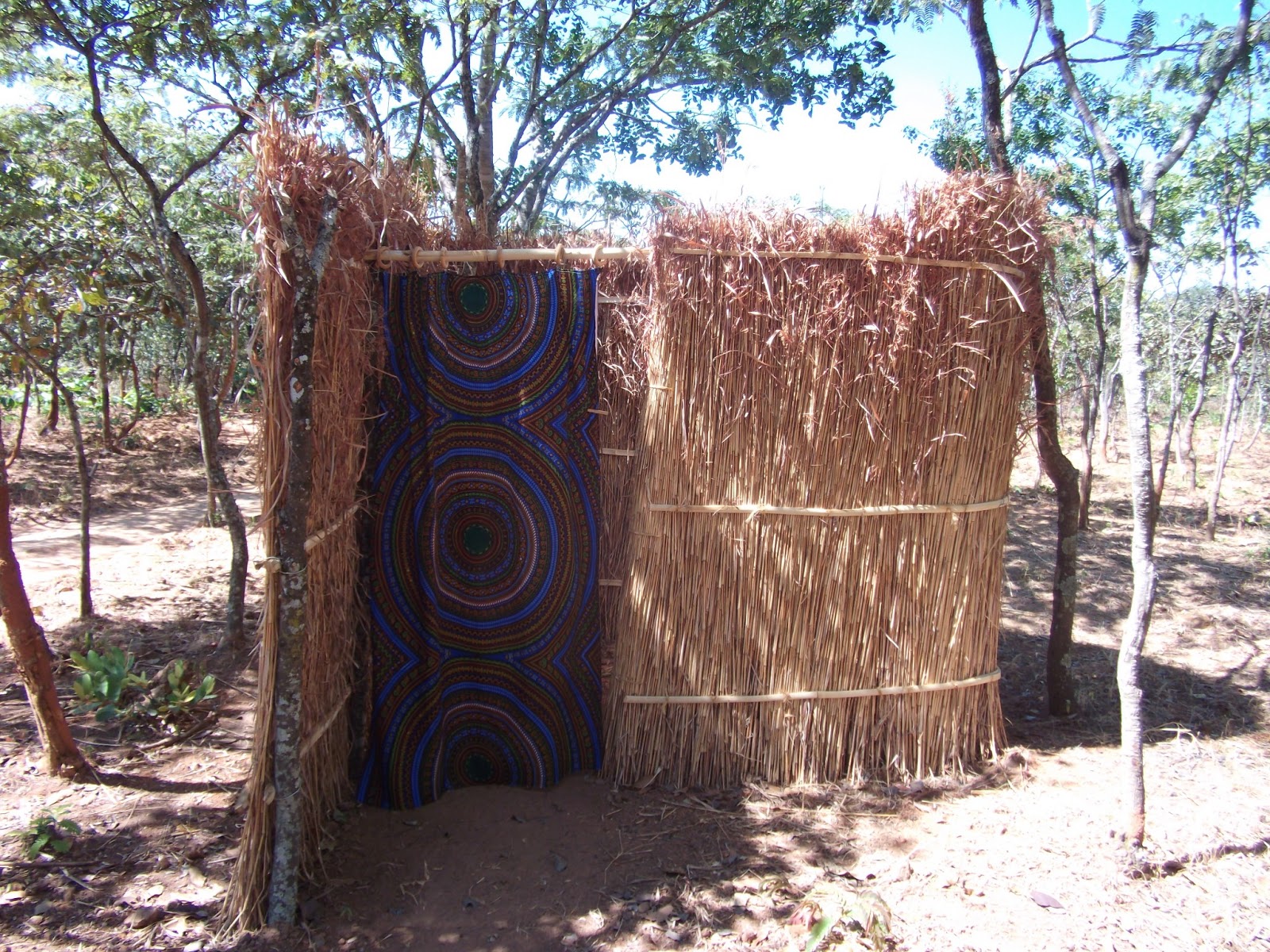
And my phone battery is rapidly dying. Yesterday I met a deaf pupil and made friends, though I wish I remembered more sign. Where's my sister Becky when you need her? He goes to a special school in Kasama, I'm told. It's inspiring to see such a bright student in grade 8 despite considerable challenges, in this area where many children never obtain that level of education- and even fewer pass grade 9 exams to go on to high school. I'm settling into my house well. The ants are persistent, the rats come and go, despite my efforts to keep things as clean as possible. I feel extremely welcomed and my Mambwe is coming along. We finished building my bathing shelter and I sewed a gorgeous curtain, so it's quite classy. I also have a bookshelf! My job right now is to meet people. Next week school starts, so I'll be doing lots of observation and learning; Peace Corps is very careful not to jump in and start changing things immediately. Things here are wonderful! Best wishes to all of you...

Subscribe to:
Posts (Atom)