I had heard a lot about Zambian funerals. Other Volunteers described them as being pretty wild. When one of the counselors (advisers) to the village chief died a few weeks ago, the Head Teacher at my zonal center school (the one next to where I live) insisted I come along. He had died, I was told, in the middle of the night or early in the morning. My Head received word around 8:00 a.m; I had my first overnight guests (two American cyclists on a 4-month journey from South Africa to Ethiopia, check out their adventures at www.toAddis.com) still at home, so I got them breakfast and got them on their way. Between 10:00 and 11:00, my Head, the school's Senior Teacher (who also is a sister-in-law to the deceased) and I began walking to the funeral home. It took perhaps 45 minutes, during which time we chatted, greeted others on the road, and had a pleasant walk. When we entered the path to the home, however, my Head broke off, whispering, "Just follow her," and I fell in behind the Senior Teacher. Calm and composed just a moment before, she now walked a bit stooped, and her shoulders began heaving up and down as she cried out, in loud sobs, "Ba Mulamo Imwe!"--roughly, "Dear brother-in-law, you!" We entered the home of the deceased. There was almost no room to sit on the floor as women were seated in every available space. The deceased was in a corner, I believe, though I couldn't see the body--the room was dark and crowded. I sat quietly, as did some other women, but many were wailing and sobbing, particularly the word, "Limwi!" It means "maybe"--but no one could really explain why they were saying maybe. I think it just has a nice wailing ring to it. A girl next to me was sobbing so violently that she began convulsing and had to be carried out of the house to another house nearby. (She was fine about half an hour later.) After 20-30 minutes in the house, the Senior Teacher led me out and we found a place on the grass outside. There were easily a few hundred people all around the house grounds, including the chief (near whom my Head was sitting). Men sat separately from women. Some were eating food they had brought along, some were talking, some were feeding babies (the constant companion of almost every woman, it seems.) My Senior Teacher, overcome with emotion in the house, began checking her cell phone for messages. After a bit she pointed out a few men with wood: "They're building the coffin right there."
Indeed, they were. In short order, a roughly-hewn wooden coffin--something that looked like it would fit right into a collection of haunted house props--was constructed and covered with a bright citenge (the all-purpose cloth common here). It was carried to the house; the women were vacated so that a few men important in the family (adult sons, etc.) could also go in and grieve. The body was then brought out in the coffin. Some prayers were said, a few songs were song, and then the body of people processed in a quick circle around the coffin, the lid of which was slightly askew to reveal the face of the deceased. I had only a brief moment to look, but the man appeared to be at calm repose. We then processed to a bit of a wooded area just a few minutes away--still part of the property--where a hole had been dug. The coffin was lowered in, a few more prayers were said, dirt was shoveled on for--it seemed to me--a long time. Crying and wailing filled the air, and I couldn't help but feel tears in my own eyes. We then walked back to the house, sat for a bit on the grass, and then began walking back to the school for afternoon classes. The burial was complete by approximately 15:00--only twelve hours or so, perhaps less, from the time of death.
I haven't captured the essence of this ceremony, and parts of it seem crude or even disingenuous in comparison with the rituals I'm familiar with back home. They're not, though--the people here just express grief differently. I was struck by the contrast between putting someone to rest here and the industry of death in the U.S. There were no cards (though certainly those unable to attend because of distance could send their regrets and condolences by mail later), no flower arrangement, no pianist, no thousands-of-dollars polished-oak-and-cushioned casket, no iron vault. There's something really beautiful about this. A man dies. His community, upon hearing, comes together to be with the family, to grieve, to pay their last respects. Those who have carpentry skills and/or a bit of wood craft a final bed; those with the strength and the tools prepare a place in the ground. The community puts the man to rest swiftly, honorably. At the same time, it's a remarkable reminder of our morbidity; one moment he was breathing, talking, moving about; only hours later, his body was a few meters beneath the soil. A wild thing, indeed.
I'm heading back to the village in a few moments. I'll do my best to try and send mobile updates, but otherwise I hope to update again the next time I'm back in Kasama at the end of July. Love to all!
Wednesday, June 29, 2011

Tuesday, June 28, 2011
Village Life
Dearest Readers,
Unfortunately, the Internet access on my phone (that is, the service network in my house) is rather fickle. Sometimes I will get access and then--poof!--I'll have a screen informing me that the phone "failed to connect." This is especially disheartening if it means that an email or message I've spent twenty or more minutes typing out finger-peck by finger-peck on my cell phone not only fails to send but is lost and gone forever. Hopefully this explains my lack of recent blog posts. Now two months in to a three-month community entry period (something common to all Peace Corps posts worldwide, I believe), I've been at the Peace Corps office/house in Kasama for the past four days, and I had hoped to write many lengthy blog entries. For some reason I can't explain, the things that you look forward to doing with electricity--like spending time typing things out on a computer--suddenly become very unappealing once the required ingredients (electricity, computer, etc.) are available. I do hope to get a few things posted, but the bottom line is that I love my house, I love my village, I love the children and my family and my school. I'm having a wonderful time, there is real potential for meaningful work, and there's no place I'd rather be living! At the moment, though, I'm exhausted, so I'll sign off for now and hope to write more soon.
Unfortunately, the Internet access on my phone (that is, the service network in my house) is rather fickle. Sometimes I will get access and then--poof!--I'll have a screen informing me that the phone "failed to connect." This is especially disheartening if it means that an email or message I've spent twenty or more minutes typing out finger-peck by finger-peck on my cell phone not only fails to send but is lost and gone forever. Hopefully this explains my lack of recent blog posts. Now two months in to a three-month community entry period (something common to all Peace Corps posts worldwide, I believe), I've been at the Peace Corps office/house in Kasama for the past four days, and I had hoped to write many lengthy blog entries. For some reason I can't explain, the things that you look forward to doing with electricity--like spending time typing things out on a computer--suddenly become very unappealing once the required ingredients (electricity, computer, etc.) are available. I do hope to get a few things posted, but the bottom line is that I love my house, I love my village, I love the children and my family and my school. I'm having a wonderful time, there is real potential for meaningful work, and there's no place I'd rather be living! At the moment, though, I'm exhausted, so I'll sign off for now and hope to write more soon.
Saturday, May 21, 2011
Mathematics and Magic
I know a certain math teacher back in the U S of A who'd be pretty proud of me today! But first, to catch up: I've been in my village for three and a half weeks now, and there's a warm sense of routine, and
yet each day is different. The pacing of life manages somehow to be both faster and slower than some other places I've known. Things are on Zam time, of course, so I find myself doing a lot of hurry-up-and-wait to get out of the house on schedule and sit for an hour until the event actually begins. Cooking and other household chores are more time-consuming, too; no microwave here. And yet it's amazing how much gets done. I was away from home most of this week--more on that to come--so today was going to be house time. My family here, who lives two houses over, invited me to church, however. I'm making the rounds at all the churches and had already committed to a Kingdom Hall visit with a teacher tomorrow, but today was Visitors' Day at the Seventh Day Adventist church, where my family members here are members, so I agreed to try to attend. So between 6:30 and 9:30 am, I drew water, swept my courtyard - grass is intentionally removed, as it creates a haven for snakes - washed a big load of clothes, boiled water for oatmeal, cleaned my water filter candles, ate, organized and cleaned some food boxes, and swept and mopped my kitchen area. Sweeping and mopping the rest of the house came later. It may not sound like much, but it needed to be done with some promptness, and I tend to feel pretty accomplished after getting the house in order- truly an ongoing task when you have open access to rodents and other pests just awaiting an invitation.
So! The reason my house was abandoned is that Monday morning we decided in a staff meeting that I
should take the place of one of the teachers and accompany about 60 pupils to a school about 35 k away for a four-day sports tournament of sorts. We had a marvelous time. It gave me a great chance for some
informal interaction with some pupils and other teacher chaperones, challenged me in terms of gender roles in Zambia in ways I didn't expect to feel so viscerally, offered multiple opportunities for dancing with the kids, whose joy seems boundless. Then, on Friday, I was off to visit the next nearest school in my zone. It was an
incredibly productive day- I had a formal introduction to staff and kids, observed three different classes and teachers, played with some young ones and in general just gave people a chance to figure out who the white girl is. So, back to today, and maths as they are called here, and magic. One of my favorite aspects of this school is that it has boarders. Many don't go home every weekend as some must walk for 5 or more hours to get there. While I shouldn't jump into classrooms too quickly, the boarders give great opportunity for informal education and exchange. I agreed to help some boys study this afternoon. Before long I was teaching similar triangles, as best I could make out from their notes. One of our priorities with the Ministry of Ed is using learner-centered methodologies. So I did. And it was magical. Kids walking by poured in, like a scene from Sister Act. And I felt that incredible excitement that you feel when you can see it, when someone
gets it, when the veil of confusion is lifted and a ray of comprehension streaks through. This evening even more pupils were studying by candlelight, when we left at 9 pm they said, "Will you be coming back at 01:00?" Me, no-that's smack in the middle of sleepy time for me, and I've got a flat tire to mend before church tomorrow.
But how incredible--they want so desperately to succeed. There is a lot of work to be done, and I'm thrilled to be witness to the magic. May you all find your x and y, wherever and whatever they are for you
today.
Much love,
Rose (my village name, if I haven't mentioned previously)
yet each day is different. The pacing of life manages somehow to be both faster and slower than some other places I've known. Things are on Zam time, of course, so I find myself doing a lot of hurry-up-and-wait to get out of the house on schedule and sit for an hour until the event actually begins. Cooking and other household chores are more time-consuming, too; no microwave here. And yet it's amazing how much gets done. I was away from home most of this week--more on that to come--so today was going to be house time. My family here, who lives two houses over, invited me to church, however. I'm making the rounds at all the churches and had already committed to a Kingdom Hall visit with a teacher tomorrow, but today was Visitors' Day at the Seventh Day Adventist church, where my family members here are members, so I agreed to try to attend. So between 6:30 and 9:30 am, I drew water, swept my courtyard - grass is intentionally removed, as it creates a haven for snakes - washed a big load of clothes, boiled water for oatmeal, cleaned my water filter candles, ate, organized and cleaned some food boxes, and swept and mopped my kitchen area. Sweeping and mopping the rest of the house came later. It may not sound like much, but it needed to be done with some promptness, and I tend to feel pretty accomplished after getting the house in order- truly an ongoing task when you have open access to rodents and other pests just awaiting an invitation.
So! The reason my house was abandoned is that Monday morning we decided in a staff meeting that I
should take the place of one of the teachers and accompany about 60 pupils to a school about 35 k away for a four-day sports tournament of sorts. We had a marvelous time. It gave me a great chance for some
informal interaction with some pupils and other teacher chaperones, challenged me in terms of gender roles in Zambia in ways I didn't expect to feel so viscerally, offered multiple opportunities for dancing with the kids, whose joy seems boundless. Then, on Friday, I was off to visit the next nearest school in my zone. It was an
incredibly productive day- I had a formal introduction to staff and kids, observed three different classes and teachers, played with some young ones and in general just gave people a chance to figure out who the white girl is. So, back to today, and maths as they are called here, and magic. One of my favorite aspects of this school is that it has boarders. Many don't go home every weekend as some must walk for 5 or more hours to get there. While I shouldn't jump into classrooms too quickly, the boarders give great opportunity for informal education and exchange. I agreed to help some boys study this afternoon. Before long I was teaching similar triangles, as best I could make out from their notes. One of our priorities with the Ministry of Ed is using learner-centered methodologies. So I did. And it was magical. Kids walking by poured in, like a scene from Sister Act. And I felt that incredible excitement that you feel when you can see it, when someone
gets it, when the veil of confusion is lifted and a ray of comprehension streaks through. This evening even more pupils were studying by candlelight, when we left at 9 pm they said, "Will you be coming back at 01:00?" Me, no-that's smack in the middle of sleepy time for me, and I've got a flat tire to mend before church tomorrow.
But how incredible--they want so desperately to succeed. There is a lot of work to be done, and I'm thrilled to be witness to the magic. May you all find your x and y, wherever and whatever they are for you
today.
Much love,
Rose (my village name, if I haven't mentioned previously)
Wednesday, May 4, 2011
It's been one week...
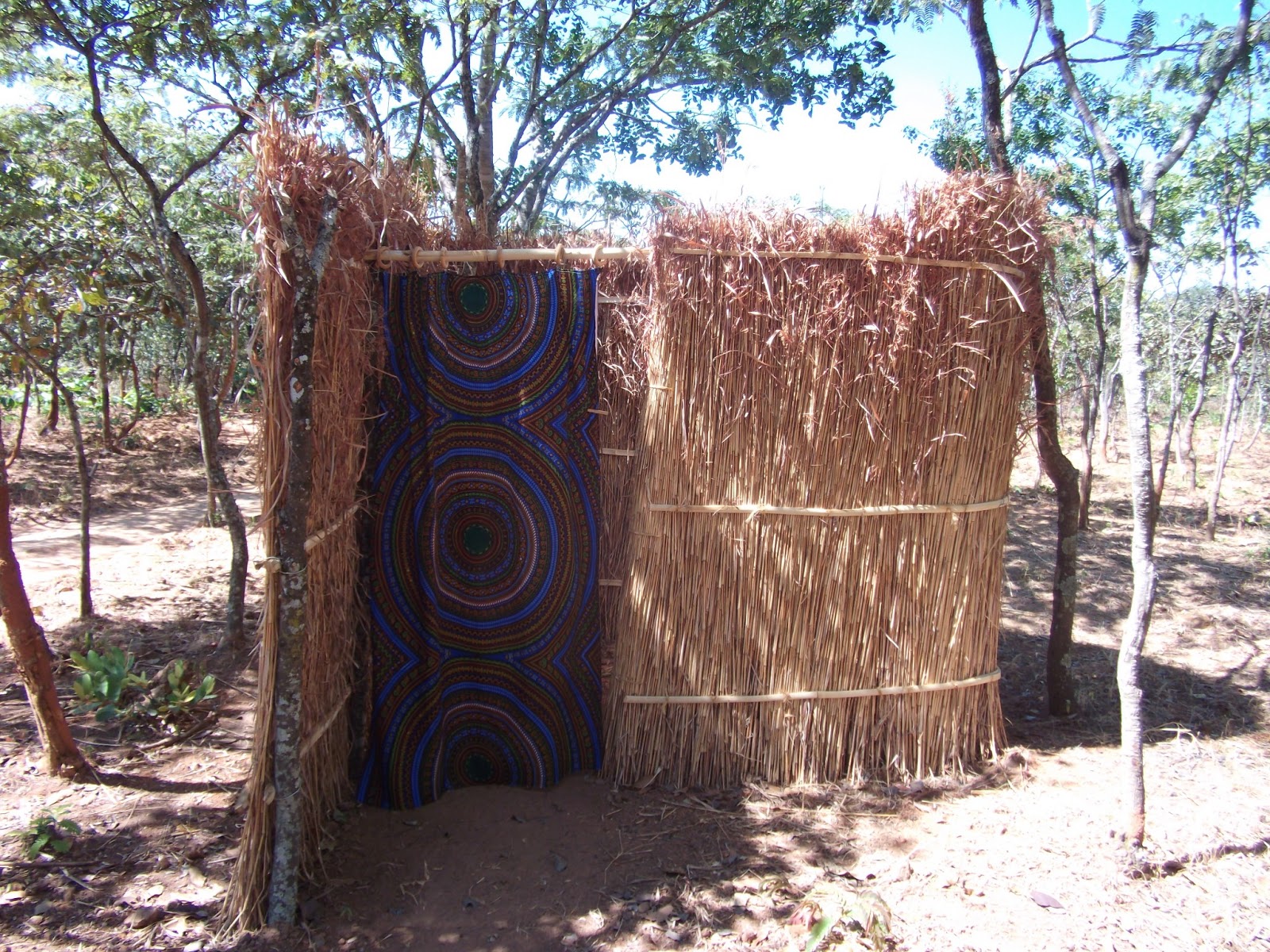
And my phone battery is rapidly dying. Yesterday I met a deaf pupil and made friends, though I wish I remembered more sign. Where's my sister Becky when you need her? He goes to a special school in Kasama, I'm told. It's inspiring to see such a bright student in grade 8 despite considerable challenges, in this area where many children never obtain that level of education- and even fewer pass grade 9 exams to go on to high school. I'm settling into my house well. The ants are persistent, the rats come and go, despite my efforts to keep things as clean as possible. I feel extremely welcomed and my Mambwe is coming along. We finished building my bathing shelter and I sewed a gorgeous curtain, so it's quite classy. I also have a bookshelf! My job right now is to meet people. Next week school starts, so I'll be doing lots of observation and learning; Peace Corps is very careful not to jump in and start changing things immediately. Things here are wonderful! Best wishes to all of you...

Wednesday, April 27, 2011
Testing...
In the cruiser, packed and ready for the couple-hour trip to my
village. I can't access this blog on my phone but if this message
posts, I may be able to do future posts via email as I am now. Let me
know! Tukatini mukwai- be well!
village. I can't access this blog on my phone but if this message
posts, I may be able to do future posts via email as I am now. Let me
know! Tukatini mukwai- be well!
Monday, April 25, 2011
New Address & Explanation of time spent here...
I have a new home, and a new address!
Henceforth, dear friends, you can send your love letters to: Andrea Mayrose/Peace Corps Volunteer, P.O. Box 420083, Mbala, Zambia, Africa. (One might think the continent unnecessary, but current volunteers advise including "Africa" since Mbala is not as well known as Lusaka and some mail tends to make its way elsewhere...like to India.)
I don't actually live in Mbala, but I live in a village less than 50km away, and I imagine I'll be able to collect the post every two weeks or so. The old address (listed in an old post) is still accurate, but will be very delayed. Once mail gets to country, it will sit at the Lusaka office for a while, then make its way to the Provincial House in Kasama. It's unlikely I'll be at the house more than once or twice a month, so that could be quite delayed.
I've also realized that most people have no idea what I've been doing. Here's a breakdown, a bit, then time to eat a delicious group dinner again. (Another 6 or so people showed up at the house, returning from vacation at Lake Tanganyika, so if you can only imagine...there are almost 20 of us.)
I left Salem, SD on January 28, 2011, spending a few days in Philadelphia with my mom.
"Staging," i.e., getting all the people for a particular training class together in one U.S. city so they can turn in some paperwork and fly out together, took place January 31st & Feb. 1st, in Philly. We departed for Zambia on February 2nd, and arrived Thursday, February 4th. Our training progressed thus:
Fly-In--Feb. 4 through 7--this was initial meetings, paperwork, a new "Ring-In" ceremony, and trainings of a very general nature. We stayed at a hostel/guest house at/near the National Resource Development College (NRDC).
First Site Visit--February 8 through 11--we left Monday morning in small groups of 3 or 4 (there were 29 in the original training class) to stay with current volunteers at their sites. "Site" means the village/area where they stay and work. This was to allow us to see, almost immediately after arriving in-country, how volunteers live and work.
Training--February 12 through 20--We returned to NRDC on Thurs, Feb. 11--a week after our arrival. We learned our language groups (there are over 72 languages in Zambia, 6 were taught in our training class...what you learn depends on where you'll be living) on Friday, Feb. 12, and transitioned from the dorm-like accomodations there (where we spent Thursday night) to individual host families in the Chongwe area. We began training (cross-cultural, medical, security, technical--for our project as educators--and language) at the Farmer's Training Institute on February 13.
Second Site Visit--late March--this was embedded into training. We were dropped off at our actual sites to stay for about 5 days. (I lived in my actual house, with a sleeping bag and a few borrowed buckets and dishes.) The idea is to meet the community so that we know a few more specifics about our situation (sites vary enormously) so that the remaining training can help address site-specific concerns. We then met at current volunteer sites in language clusters--so I and my fellow "Mambwe Mama" (Mambwe is spoken only in a small area of Northern Province, and a bit of Tanzania, so there are only two of us learning that language) met at the home of a current Mambwe-speaking volunteer. Our language trainer also came to this part of second site visit, which lasted about 4 days and included language and cultural training activities.
Cultural Day--February 19--This was our graduation ceremony to thank our host families, the teachers who helped us in our technical training, and others. We cooked a big "American" meal, had a Zambia dance troupe as guest performers, and said goodbye to the families with whom we'd lived for 11 weeks.
Swear-In--February 21--This was our official induction as Peace Corps Volunteers (rather than Trainees, as we were previously). This took place at the Ambassador's residence in Lusaka and was pretty formal, even a bit more so than Cultural Day.
Posting--this is my current stage. We're all in our Provincial capitals buying necessary groceries and household goods so we can "nest." This is a bit longer this time around, due to the Easter weekend holiday--shops aren't open as they otherwise might be. By the end of this week, we'll all be in our sites.
Then begins Community Entry--the 3-month period where we don't have vacation or Provincial House privileges. The idea is that we are to remain in our district (not necessarily our village, but the surrounding area) for three months so that we integrate into the community slowly but well. It's also a unique facet of Peace Corps in that the work we do is primarily observation and relationship-building. Our goal is to assess the needs of the community. The RED (Rural Education Development) project of which I am part is more highly structured than some Peace Corps programs, but even so we are meant to assess the needs of the schools in our zone. I won't show up and start teaching or training teachers. I'll show up and observe teachers, observe students, get a sense for what the community is and what it wants and needs. After settling in, collecting a lot of baseline data, and becoming members of our respective communities, our training class will reconvene near Lusaka for a two-week In-Service Training in mid-August.
Hope that helps a bit. Every Peace Corps program is a bit different, so this may not translate to other Volunteers in other countries. In fact, the logistical details of this training differ even from the last training, and from the next, so it's an active beast. Things are great--Peace Corps/Zambia is a great fit for me, and I'm excited to get to my village. Love to all!
Henceforth, dear friends, you can send your love letters to: Andrea Mayrose/Peace Corps Volunteer, P.O. Box 420083, Mbala, Zambia, Africa. (One might think the continent unnecessary, but current volunteers advise including "Africa" since Mbala is not as well known as Lusaka and some mail tends to make its way elsewhere...like to India.)
I don't actually live in Mbala, but I live in a village less than 50km away, and I imagine I'll be able to collect the post every two weeks or so. The old address (listed in an old post) is still accurate, but will be very delayed. Once mail gets to country, it will sit at the Lusaka office for a while, then make its way to the Provincial House in Kasama. It's unlikely I'll be at the house more than once or twice a month, so that could be quite delayed.
I've also realized that most people have no idea what I've been doing. Here's a breakdown, a bit, then time to eat a delicious group dinner again. (Another 6 or so people showed up at the house, returning from vacation at Lake Tanganyika, so if you can only imagine...there are almost 20 of us.)
I left Salem, SD on January 28, 2011, spending a few days in Philadelphia with my mom.
"Staging," i.e., getting all the people for a particular training class together in one U.S. city so they can turn in some paperwork and fly out together, took place January 31st & Feb. 1st, in Philly. We departed for Zambia on February 2nd, and arrived Thursday, February 4th. Our training progressed thus:
Fly-In--Feb. 4 through 7--this was initial meetings, paperwork, a new "Ring-In" ceremony, and trainings of a very general nature. We stayed at a hostel/guest house at/near the National Resource Development College (NRDC).
First Site Visit--February 8 through 11--we left Monday morning in small groups of 3 or 4 (there were 29 in the original training class) to stay with current volunteers at their sites. "Site" means the village/area where they stay and work. This was to allow us to see, almost immediately after arriving in-country, how volunteers live and work.
Training--February 12 through 20--We returned to NRDC on Thurs, Feb. 11--a week after our arrival. We learned our language groups (there are over 72 languages in Zambia, 6 were taught in our training class...what you learn depends on where you'll be living) on Friday, Feb. 12, and transitioned from the dorm-like accomodations there (where we spent Thursday night) to individual host families in the Chongwe area. We began training (cross-cultural, medical, security, technical--for our project as educators--and language) at the Farmer's Training Institute on February 13.
Second Site Visit--late March--this was embedded into training. We were dropped off at our actual sites to stay for about 5 days. (I lived in my actual house, with a sleeping bag and a few borrowed buckets and dishes.) The idea is to meet the community so that we know a few more specifics about our situation (sites vary enormously) so that the remaining training can help address site-specific concerns. We then met at current volunteer sites in language clusters--so I and my fellow "Mambwe Mama" (Mambwe is spoken only in a small area of Northern Province, and a bit of Tanzania, so there are only two of us learning that language) met at the home of a current Mambwe-speaking volunteer. Our language trainer also came to this part of second site visit, which lasted about 4 days and included language and cultural training activities.
Cultural Day--February 19--This was our graduation ceremony to thank our host families, the teachers who helped us in our technical training, and others. We cooked a big "American" meal, had a Zambia dance troupe as guest performers, and said goodbye to the families with whom we'd lived for 11 weeks.
Swear-In--February 21--This was our official induction as Peace Corps Volunteers (rather than Trainees, as we were previously). This took place at the Ambassador's residence in Lusaka and was pretty formal, even a bit more so than Cultural Day.
Posting--this is my current stage. We're all in our Provincial capitals buying necessary groceries and household goods so we can "nest." This is a bit longer this time around, due to the Easter weekend holiday--shops aren't open as they otherwise might be. By the end of this week, we'll all be in our sites.
Then begins Community Entry--the 3-month period where we don't have vacation or Provincial House privileges. The idea is that we are to remain in our district (not necessarily our village, but the surrounding area) for three months so that we integrate into the community slowly but well. It's also a unique facet of Peace Corps in that the work we do is primarily observation and relationship-building. Our goal is to assess the needs of the community. The RED (Rural Education Development) project of which I am part is more highly structured than some Peace Corps programs, but even so we are meant to assess the needs of the schools in our zone. I won't show up and start teaching or training teachers. I'll show up and observe teachers, observe students, get a sense for what the community is and what it wants and needs. After settling in, collecting a lot of baseline data, and becoming members of our respective communities, our training class will reconvene near Lusaka for a two-week In-Service Training in mid-August.
Hope that helps a bit. Every Peace Corps program is a bit different, so this may not translate to other Volunteers in other countries. In fact, the logistical details of this training differ even from the last training, and from the next, so it's an active beast. Things are great--Peace Corps/Zambia is a great fit for me, and I'm excited to get to my village. Love to all!
Sunday, April 24, 2011
post-Skype-initiation...
After an incredibly delicious meal (made-from scratch tortillas, grilled chicken, rice, beans, salsa, guacamole, yum), I had my first Skype experience with my family back in Salem. Follow that with a viewing of The Patriot (the Provincial House has electricity and a fabulous movie collection) and a few episodes of The Office, and those of us here at the moment passed out under our mosquito nets around 1:30a.m. Up again at 5 a.m. to join in (via Skype) on the Easter celebration happening among old friends from the UCSD Newman Center Young Adult Group, and then attempts to clean out the ol' inbox and upload some photos. To all of you who took time out to say hello to my face via computer--thanks! I miss you so! Everyone looks fantastic, though, and it's great to see you in such good spirits!
After finishing this post, I'll be heading out with my fellow newbies and our Provincial welcome wagon team (those who happen to be around the house for the holiday weekend) to purchase house supplies (buckets, pots, mattresses, etc.) for our new homes.
Having chatted with folks back home just a bit, I realize I am way overdue for some basic info. I've had 11 weeks of cultural, language, security, and medical training, so there's no way I can condense it all properly. Please bear with me; over the next two days I'll try to paint a clearer picture of what's happening here.
A bit about Chishimba Falls (the site of yesterday's outing), from http://www.zambiatourism.com/travel/places/waterfal.htm:
"A combination of about three successive falls about 33 kms from Kasama, in the Northern Province. On the Eastern bank of the river just above the falls is a camp site. There is a rain forest on the Western Bank.
The Bemba people regard the Chishimba Falls as one of the most sacred places of power. The nature spirit Chishimba resides in the cave below the Falls which is a place of prayer and honour. No insults, curses, words of vengeance or hatred may be uttered in the vicinity of the caves."
Standing under that waterfall was pretty powerful--what an incredible way to spend an Easter afternoon!
 Pictured here are the RED 2011 Volunteers delegation, if you will, to Northern Province. L-R is me, Aniela, Joe, Shannon, and Jessi. A great crew to be a part of!
After finishing this post, I'll be heading out with my fellow newbies and our Provincial welcome wagon team (those who happen to be around the house for the holiday weekend) to purchase house supplies (buckets, pots, mattresses, etc.) for our new homes.
Having chatted with folks back home just a bit, I realize I am way overdue for some basic info. I've had 11 weeks of cultural, language, security, and medical training, so there's no way I can condense it all properly. Please bear with me; over the next two days I'll try to paint a clearer picture of what's happening here.
A bit about Chishimba Falls (the site of yesterday's outing), from http://www.zambiatourism.com/travel/places/waterfal.htm:
"A combination of about three successive falls about 33 kms from Kasama, in the Northern Province. On the Eastern bank of the river just above the falls is a camp site. There is a rain forest on the Western Bank.
The Bemba people regard the Chishimba Falls as one of the most sacred places of power. The nature spirit Chishimba resides in the cave below the Falls which is a place of prayer and honour. No insults, curses, words of vengeance or hatred may be uttered in the vicinity of the caves."
Standing under that waterfall was pretty powerful--what an incredible way to spend an Easter afternoon!

Subscribe to:
Posts (Atom)